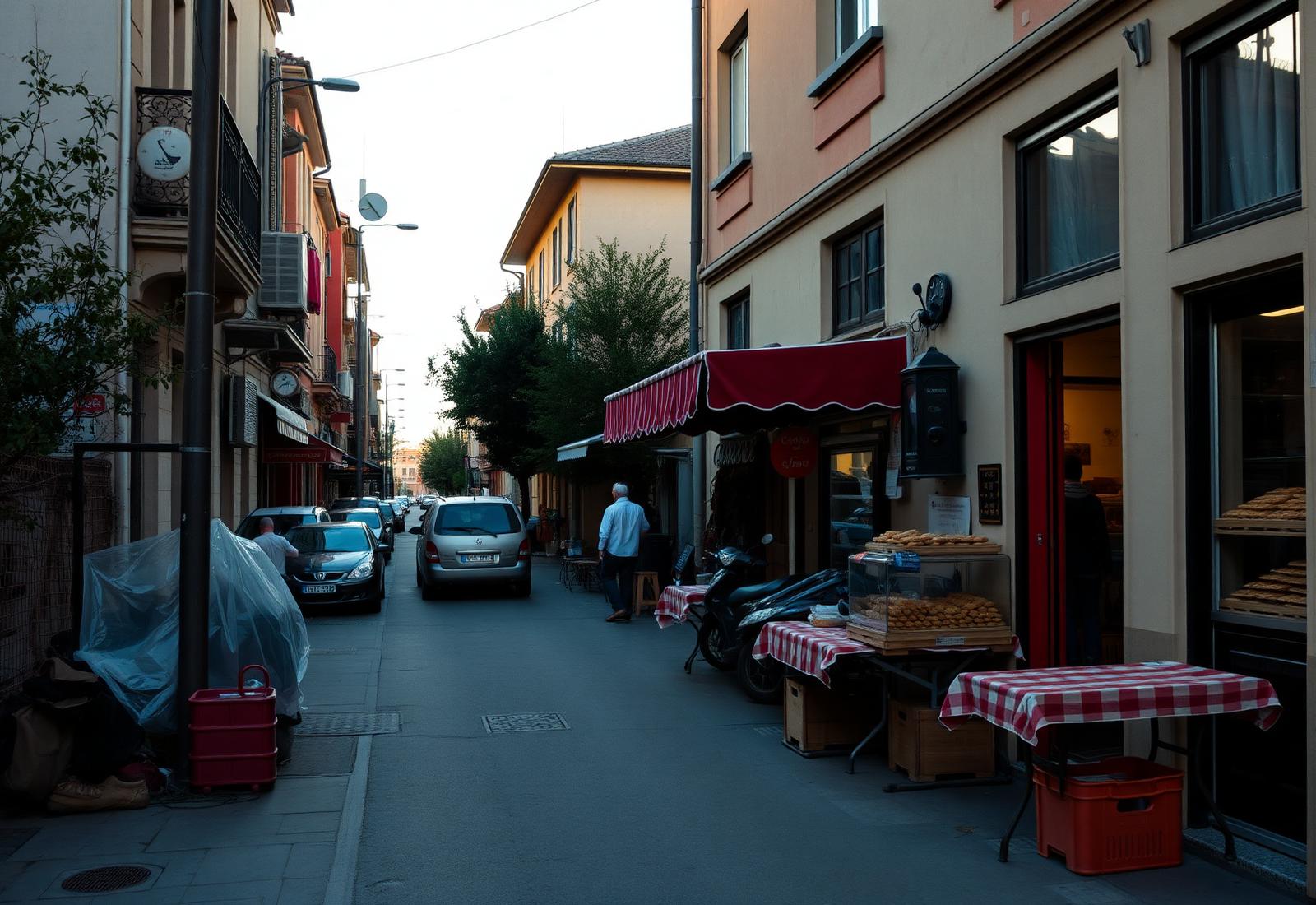
Communication, understanding of time, formality, neighborhood, and contact with authorities: how habits often differ – and how to deal with them calmly.
By Glenna · Published on 31 July 2026 · Last reviewed: July 2026 · Reading time approx. 5 minutes
Before we begin, an important qualification: there is no such thing as 'the Bulgarians' and 'the Germans'. There are greater differences between a doctor in Sofia, a craftsman in a village near Kavarna, and a student in Varna than between some German-Bulgarian comparisons. What can be described are common habits and expectations that often stand out to newcomers. Take the following as guidance, not as a rule – and expect your counterpart to be completely different in individual cases.
Show contents
Communication styles
Many newcomers experience conversations in Bulgaria as more indirect when it comes to something unpleasant. A clear 'no' is more often avoided; instead, one hears 'difficult', 'we'll see', or a shift to another topic. Anyone who reads this as a 'yes' sometimes waits a long time for a result.
At the same time, the tone in other situations can seem very direct – for example, in authorities or shops, where brief sentences without introductory polite formulas are common. This is rarely meant to be unfriendly, but simply a different tone of voice. A well-known stumbling block remains body language: nodding often means no, and shaking your head means yes. Ask when in doubt.
Appointments and understanding of time
In many places, appointments are considered more of a guide than an exact commitment – especially with craftsmen, deliveries, and services. 'I'll come tomorrow' can mean tomorrow, the day after, or on Friday. In doctor's offices and administrative departments, waiting times are normal; in clinics and with private providers, however, appointment reliability is often high.
The practical way to deal with this is easier than it sounds: plan for buffers, briefly confirm appointments the day before, and don't schedule three things in a row on one day that all have to work punctually. Anyone who does this experiences delays as a minor irregularity rather than a ruin of the day.
Formality and forms of address
The polite form ('Вие') is common with strangers, older people, and in official departments; the switch to the informal 'du' often happens more quickly and casually than in Germany, especially in private contexts. Titles and professional designations play a noticeable role in dealing with doctors, lawyers, and administrative staff.
As an older person, you will be treated with respect in many situations – an advantage that many newcomers only notice late. Stick to the formal address yourself until your counterpart offers something else; this is never considered a mistake.
Customer service
Service expectations differ significantly. In smaller shops and administrative departments, newcomers sometimes experience interactions as businesslike to dismissive, while the same person can be extremely attentive after a few visits. Friendliness here often arises through familiarity, not through a service role.
Complaints according to the German model – written, formal, with reference to rights – rarely lead to a goal quickly. A calm personal conversation, patience, and repetition are more effective. Deadlines for complaints and warranties exist, of course; how you enforce them should be clarified with a specialist in case of emergency.
Neighborhood
Neighborhood is more immediate in many places than in German cities: people greet each other, ask questions, help out, and bring things over. This may be perceived as curiosity at first, but it is usually interest and care – especially towards older newcomers.
Those who participate quickly gain reliability in everyday life: someone who has the key, waters the flowers, or lets you know in winter if something is wrong. In residential complexes, there are also collective agreements and levies; participate in meetings, even if you understand little at first.
Family and hospitality
Family ties carry great weight in many households: several generations stay in close contact, holidays are celebrated together, and family obligations take precedence over professional appointments in case of doubt. This explains some short-term cancellations better than any service criticism.
Hospitality is pronounced and taken seriously. An invitation is usually meant sincerely; bring a small gift and expect a generous spread. Refusing what is offered can be read as distance – taking a small portion is the easier answer.
Authority communication
Paper, stamps, and completeness are important when dealing with authorities. Information can differ depending on the clerk, and what was true yesterday is occasionally handled differently today. This is irritating for German habits but not a personal problem.
The following has proven successful: bring all documents in original and copy, note the name and date of every conversation, and in the case of contradictory information, politely ask for a written confirmation or for the responsible office. For binding information, always rely on the authority itself, not on reports from other newcomers.
Follow-up questions and clarification
Because much is done orally and indirectly, patient questioning is the most important everyday skill. Ask for specific information instead of agreement: not 'Does that work?', but 'On exactly which day?', 'How much does it cost in total?', 'What else do you need from me?'.
Repeat agreements in your own words and record important things in writing – a short message with the date, time, and price is sufficient. This is not because you are distrusted, but because oral agreements are remembered differently. In all cultures.
Avoid negative comparisons
The quickest way to make yourself unpopular is to constantly compare things with Germany – especially in the form of 'it works better in our country'. This is understood as condescension, even if it was meant objectively, and closes doors that would otherwise stand open.
The comparison is equally tiring for yourself. Anyone who measures every process against a German reference point experiences deviations every day. It is more useful to ask: how does it work here – and what do I have to do to make it work for me? Anything you want to change is best changed quietly through your own preparation.
Dealing with lack of clarity
Some situations initially remain unclear: contradictory information, an appointment without confirmation, an invoice whose items you cannot assign. Enduring this uncertainty without immediately interpreting it as a problem saves a lot of trouble.
In practical terms, this means: don't try to clarify everything on the same day, check important things two or three times from different sources, and for anything that has legal or financial consequences, consult a specialist instead of improvising. For the other things, waiting is often the right reaction.
Adaptation without self-sacrifice
Adapting does not mean giving up your own habits. You are allowed to be punctual, record things in writing, keep records in order, and structure your daily routine – no one will hold that against you. Adaptation concerns the expectation of others, not your own way of life.
A viable measure usually lies somewhere in between: your own standards for what you have in your own hands, and composure for everything else. How easy this is for you depends heavily on your character and your life situation. Some people find this attitude after a few weeks, others need a year – both are completely normal.
Serenely through the first months
0 of 20 items done. Your selection is only for your own overview and is not saved.
Common expectations in comparison – as a tendency, not a rule
Area
Common German expectation
Common experience in Bulgaria
Practical reaction
Cancellation
Clear no
‘Difficult’, ‘we'll see’, evasiveness
Ask specifically for day and price
Appointment
Time is binding
Guidance, especially with craftsmen
Plan for buffer, confirm the day before
Service
Friendliness as a role
Friendliness through familiarity
Come back, stay calm
Complaint
Written and formal
Personal conversation works faster
Talk first, then write
Neighborhood
Maintain distance
Direct contact, mutual help
Greet people, accept small favors
Authority
Uniform information
Information can deviate
Take notes, cross-check, request written form
Agreement
Valid even orally
Memories diverge
Summarize briefly in writing
Agreement
Nodding means yes
Nodding often means no
Ask questions instead of interpreting
Suitable offers and events
Cultural differences are best classified in conversation and encounters – not from lists.
Individual legal, tax, insurance or medical questions are not answered via WhatsApp. For a detailed assessment, please book the online consultation.
About the author
Glenna grew up German-Bulgarian, completed her medical degree in Varna and supports German-speaking people with orientation, organisation and integration in Bulgaria.
Friendships rarely arise on their own after a move. How to systematically build a resilient environment in Bulgaria – German-speaking, international and Bulgarian.
Reading time approx. 6 minutes · Last reviewed on 31/07/2026
Which steps are important after arriving in Bulgaria?
Orientation for the first few days after arrival in Bulgaria: Accommodation and address, documents, telephone, mobility, health records, bank, utilities, and emergency contacts.
Reading time approx. 6 minutes · Last reviewed on 31/07/2026