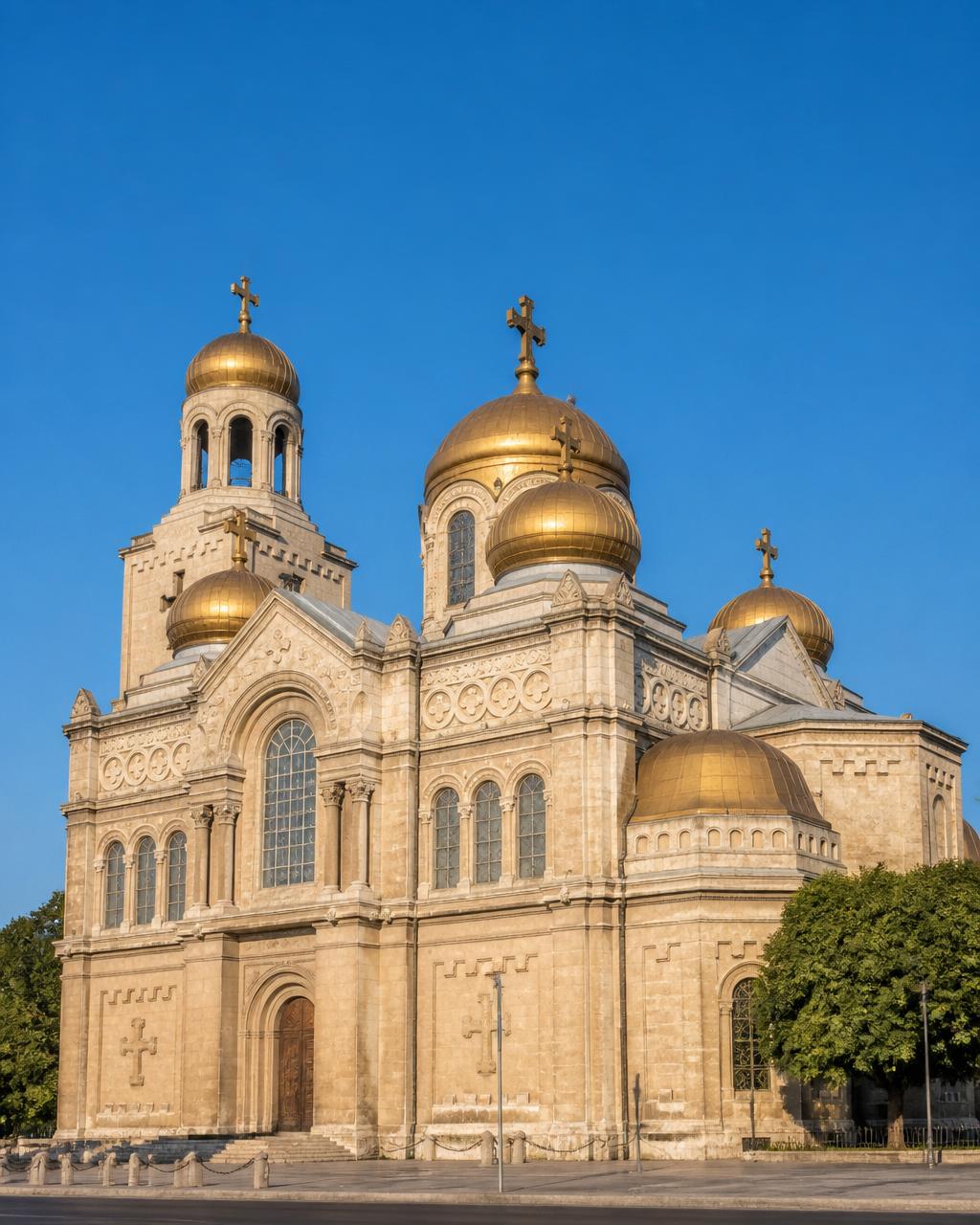
Integration
Building social contacts in Varna
The most difficult part of a move is rarely the bureaucracy, but the social environment. These paths have proven themselves locally.
Reading time approx. 5 minutes · Last reviewed on 12/07/2026
Integration
Friendships rarely arise on their own after a move. How to systematically build a resilient environment in Bulgaria – German-speaking, international and Bulgarian.
By Glenna · Published on 31 July 2026 · Last reviewed: July 2026 · Reading time approx. 6 minutes
Of all the topics surrounding a move abroad, the social aspect is the one most frequently underestimated. Housing, authorities and healthcare can be planned and ticked off; a circle of friends cannot. It develops over months, through repetition and coincidence – and neither happens on its own if no one creates an occasion. Those who had an environment in Germany that had grown over decades often only notice in the third or fourth month how quiet it has become. This guide shows how you can build contacts in Bulgaria deliberately and without pressure, developing several circles at the same time.
In your previous life, contacts came through work, family, neighbourhood and habit – without your own doing. After a move in retirement, exactly this framework falls away. Those who wait for something to happen usually wait a long time, because no one from the outside provides an occasion.
Therefore, treat social building like any other part of the move: with a plan, with fixed appointments and with realistic expectations. A robust rule of thumb is that out of ten encounters, about one becomes a recurring acquaintance, and out of several acquaintances over months, a friendship develops. This is not a question of sympathy, but of frequency.
In Varna and along the coast, there are German-speaking regular meetups (Stammtische), Facebook groups, hiking groups and informal gatherings. For the first few weeks, they are exceptionally valuable: you get orientation, practical tips and the feeling of not being alone – without a language barrier.
Nevertheless, take the information there as personal experiences, not as binding advice. Questions about authorities, taxes and health are frequently answered incorrectly or are outdated in such groups. Use the groups for contacts and everyday tips, not as a replacement for the responsible authorities and professionals.
Varna has an established international community: British, Dutch, Scandinavians, Poles, Russian-speakers and many others. People meet for language tandems, sports, card games, concerts or in certain cafés and restaurants that are considered meeting points.
The advantage of these circles is that everyone involved has been in a similar situation: everyone knows the feeling of a new beginning, and the threshold for speaking to someone is correspondingly low. Those who speak some English often find a connection here more quickly than in purely German-speaking circles.
In many parts of Bulgaria, neighbouring still works very directly: people greet each other, help each other, bring something over. For newcomers, this is a great opportunity – provided they take the first step. A greeting in Bulgarian, a short conversation in the hallway, a small gesture when moving in: that's all it takes at the beginning.
Do not expect quick familiarity; relationships develop more slowly and through specific occasions. Older neighbours in particular often speak no German and no English, but sometimes Russian. Those who help themselves in such situations with their hands, a translation app and patience quickly gain sympathy – effort counts more than perfection here.
Associations and regular groups are the most reliable way to recurring encounters: hiking groups, swimming, yoga, dance, chess, choirs, photography or gardening groups. The decisive factor is not the topic, but the fixed appointment – because it is exactly the repetition that creates familiarity.
Look for two offers that you can stick to regardless of your mood on the day, and give each at least three sessions before you judge. The first time is almost always uncomfortable, the third rarely. Those who stop after one visit only experience the uncomfortable part.
Varna has an opera house, theatre, concerts, museums, festivals and numerous open-air events in summer. Music and visual arts have the advantage that they require hardly any language – you can participate before you speak a word of Bulgarian.
Cultural events are no replacement for a circle of friends, but they structure the week, provide topics for conversation and lead to recurring faces. Anyone who regularly attends the same series will know a surprising number of people by sight after a season – and that is frequently the beginning.
A Bulgarian course brings two things at once: basic language skills and a fixed group of people in the same situation. Experience shows that course groups are one of the most productive sources for new acquaintances because you see each other weekly and do something difficult together.
Even modest knowledge changes daily life noticeably. Those who can greet, say thank you, ask for the price and read the Cyrillic alphabet are perceived differently – as someone who wants to stay, not as a guest. Perfection is not necessary for this.
Read more: Learning Bulgarian in retirement
Anyone who contributes becomes part of a community more quickly than someone who only participates. There are many possibilities: animal welfare, beach and park clean-ups, support at festivals, tutoring in German or English, help in social institutions or manual work in a neighbourhood initiative.
Start small and with a clear time commitment that you can definitely keep. One reliable morning a month is worth more than a large promise that ends after eight weeks. Clarify beforehand what formal requirements an institution has – this differs depending on the provider.
Friendships arise from repetition in the same places. Those who always have breakfast in the same café, always go to the same market on Fridays, always swim on Tuesdays, will be recognised and greeted after a few weeks – and eventually spoken to.
Therefore, establish three to four fixed points in the week and stick to them for at least a quarter of a year, even on days when you don't feel like it. These routines are also the best protection against the quiet weeks in winter, when spontaneous occasions become rarer.
Online groups are excellent for finding appointments, recommendations and initial contact persons. As a social environment, they are not enough: a chat does not replace an afternoon at the table, and a large group with hundreds of members does not replace three people you can call.
Therefore, use the digital realm consistently as a bridge to the real world: anyone who writes in a group should appear at a meeting of this group within two weeks. Maintain your connections to Germany in parallel – but make sure that daily video calls do not replace building contacts on site.
A common pattern: newcomers quickly find a connection in a German-speaking circle – and stay there. This works as long as the group exists. If it breaks up, individual members move back to Germany or there is a dispute, you suddenly find yourself without an environment.
Therefore, build up three independent circles from the beginning: a German-speaking one, an international one and a Bulgarian one. This costs more initial effort but is significantly more stable. Additionally, take care not to tie yourself to groups in which complaining is the main activity – this shapes your own view of your new life more strongly than you think.
The first month determines more than any later one, because curiosity and energy are greatest then. Set yourself small, verifiable goals: in week one, greet the neighbours in the building and establish two regular locations; in week two, attend a German-speaking meeting; in week three, sign up for a language course or a group; in week four, attend a cultural event and arrange a second meeting with one person.
Note names and where you met someone – otherwise, after four weeks, you will hardly remember. And expect that there will be weeks when nothing happens. That is normal and not a sign that the decision was wrong. How quickly an environment develops varies individually and depends on character, health and life situation.
0 of 24 items done. Your selection is only for your own overview and is not saved.
| Method | Strength | Limit |
|---|---|---|
| German-speaking groups | Immediate connection without language barrier | Information often outdated; risk of isolation |
| International groups | Everyone was new themselves, low threshold | Some English helpful; often seasonal |
| Bulgarian neighbours | Everyday closeness, real roots | Takes time and initial language efforts |
| Associations and courses | Fixed appointments, reliable repetition | Registration and perseverance required |
| Cultural events | Hardly any language needed, structures the week | No replacement for a circle of friends |
| Volunteering | You become a part instead of just a guest | Time commitment must be reliable |
| Online groups | Appointments, recommendations, initial contact persons | No replacement for personal meetings |
These Bulgaria Bound formats are designed to create recurring encounters. Fixed dates will be published as soon as they are confirmed.
Informal German-speaking exchange for newly arrived people – the simplest first point of contact.
One specific topic per evening; you will get to know people in the same situation.
Practical language sessions – regular appointments are also reliable social contacts.
Individual support in building routines and your own contacts on site.
Excursions and cultural appointments together with authorised partners in the region.
Dates are published as soon as they are fixed. No dates are announced that have not been confirmed.
Be informed about new datesLast reviewed: July 2026. Requirements and offers may change; the information provided by the competent authorities is authoritative.
Bulgaria Bound can support you with planning, coordination and selected practical steps. Professional advice is provided by independent professionals.
Do you have a short organisational question on this topic?
Individual legal, tax, insurance or medical questions are not answered via WhatsApp. For a detailed assessment, please book the online consultation.
Glenna grew up German-Bulgarian, completed her medical degree in Varna and supports German-speaking people with orientation, organisation and integration in Bulgaria.
More about GlennaIntegration
The most difficult part of a move is rarely the bureaucracy, but the social environment. These paths have proven themselves locally.
Reading time approx. 5 minutes · Last reviewed on 12/07/2026

Integration
Just a few hundred words change everyday life noticeably. The article shows a realistic learning path without overwhelm.
Reading time approx. 5 minutes · Last reviewed on 08/07/2026
Regions
Between November and March, the coast shows its second face. Knowing districts, heating, transport, and supply in winter makes your decision about where to live more robust.
Reading time approx. 8 minutes · Last reviewed on 31/07/2026